California’s Fiscal Reckoning: How a 1978 Property Tax Cap Casts a Long Shadow Over Proposition 40

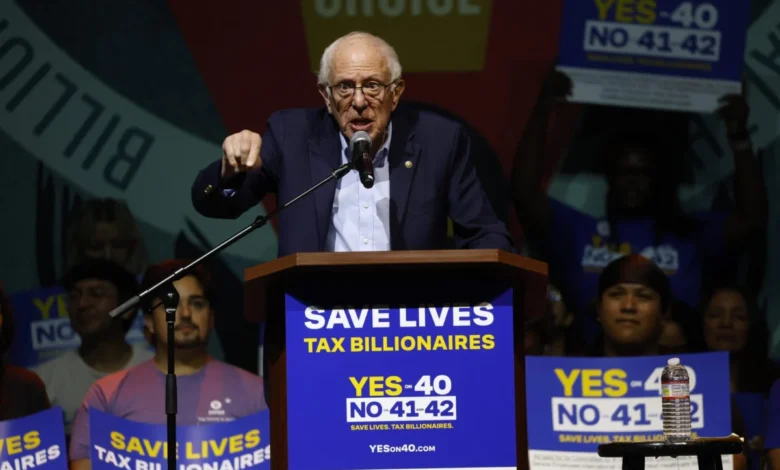
As California voters prepare to head to the polls to decide the fate of Proposition 40—a fiercely debated and unprecedented billionaire wealth tax—a much older, ghost-like legislative specter continues to loom over the state’s fiscal landscape. Nearly five decades after its landmark passage, Proposition 13 remains the foundational architect of California’s current budgetary anxieties, forcing lawmakers to lean heavily on volatile income taxes and setting the stage for today’s high-stakes clash over ultra-high-net-worth taxation.
To understand why California finds itself weighing a controversial 5% one-time levy on residents worth more than $1 billion, financial analysts and economists argue that one must first look back to the grassroots tax revolt of the late 1970s. That historical policy choice fundamentally narrowed the state’s tax base, transforming its revenue streams into a rollercoaster ride driven by the stock market and the fortunes of a tiny fraction of elite earners.
The 1978 Turning Point: How Proposition 13 Rewrote the Rules
The roots of California’s modern budgetary vulnerabilities trace directly back to June 1978. Amid a wave of public frustration over surging real estate values and skyrocketing local tax bills, California voters overwhelmingly approved Proposition 13. The initiative fundamentally altered the state’s relationship with property owners by capping property taxes at just 1% of a property’s assessed value. Furthermore, it limited annual increases in assessed valuation to a maximum of 2% and mandated that properties could only be reassessed at full market value when sold or undergoing substantial renovation.
The measure arrived on the heels of a broader conservative tax revolt that swept the nation, serving as a powerful precursor to the election of Ronald Reagan to the presidency and an era of sweeping conservative governance. However, for the state government in Sacramento, the immediate aftermath of Prop 13 meant a drastic curtailment of predictable local property tax revenues. To compensate for the shortfall, the state was forced to pivot aggressively toward alternative methods of generating revenue, placing an outsized reliance on income taxes, including capital gains.
Decades later, this structural shift has yielded the most progressive income-tax structure in the United States. Today, California levies a top marginal income tax rate of 13.3%. When combined with federal income tax rates, the total marginal burden on high earners can easily exceed 50%. Consequently, the top 1% of earners in the state account for as much as half of all personal income tax revenue. While this provides vast sums during economic booms, it leaves state coffers profoundly volatile, swinging violently in tandem with Wall Street returns and tech sector valuations. Compounding the issue, the ultra-wealthy frequently draw little to no traditional "income," instead leveraging accumulated assets to finance their lifestyles and bypass conventional income tax brackets.
Enter Proposition 40: The Billionaire Wealth Tax Battle
Against this backdrop of fiscal volatility and widening income inequality, Proposition 40 has emerged as the centerpiece of California’s current political debate. The ballot measure, heavily backed by labor unions and progressive advocates, targets state residents with a net worth exceeding $1 billion, requiring them to pay a one-time tax equivalent to 5% of their total assets.
Proponents of the measure argue that the ongoing artificial intelligence boom and unprecedented capital concentration make a billionaire wealth tax not only feasible, but morally and economically necessary. Supporters estimate that Prop 40 could generate upwards of $100 billion in immediate revenue, providing a vital financial cushion to offset anticipated federal cuts to health and social safety net spending. They contend that even after paying the one-time 5% assessment, California’s ultra-rich would comfortably remain among the wealthiest individuals on the planet.
Conversely, opponents—including prominent business leaders, startup founders, and venture capitalists—have issued dire warnings regarding the measure’s potential fallout. Critics argue that a wealth tax would stunt economic growth, choke the state’s vibrant entrepreneurial ecosystem, and force tech founders to liquidate significant portions of their equity ownership just to satisfy the tax liability. Furthermore, opponents point to growing evidence that such a punitive tax would accelerate an exodus of high-net-worth individuals to more tax-friendly states, ultimately triggering a net loss of revenue for California over the long term.
The "Original Sin": Re-Evaluating Property Taxes
As policymakers grapple with the polarizing debate over Proposition 40, some economists argue that both proponents and opponents are missing the forest for the trees. According to Princeton economist Owen Zidar and University of Chicago Booth School of Business economist Eric Zwick, authors of the book The Everywhere Millionaire, California is attempting to fix a leak in the roof while ignoring a collapsed foundation.
In a recent op-ed published in The New York Times, Zidar and Zwick pointed directly to the state’s historical legislation as the root cause of its financial distress. "The original sin underlying California’s tax structure is Prop 13, the 1978 law that rewrote the rules of property ownership," the economists wrote. "Getting rid of it would be a more efficient and durable way to make the rich pay their fair share."
Because Prop 13 insulated property assessments from actual market appreciation, home values across California have vastly outpaced the taxes levied upon them. Zidar and Zwick estimate that California homeowners currently pay an average effective tax rate of just 0.8% on their properties. By comparison, homeowners in Texas pay an average of roughly 2%.
The financial implications of this disparity are stark. If California were to adjust its residential property tax structure to mirror Texas, overall residential property tax revenue would more than double, generating vital public funds while simultaneously helping to cool overheated home prices—which the economists estimate could drop by around 13% as speculative pressures recede.
Political Realities and Public Resistance
Yet, untangling the web woven by Proposition 13 is far easier in economic theory than in practical politics. Property taxes in states like Texas have recently sparked their own fierce voter revolts during midterm election cycles. While Texas proudly levies no state income tax, residents frequently complain that the overall tax burden remains onerous due to high local property tax rates managed by municipal and county governments.
In California, dismantling or even significantly reforming Proposition 13 remains a political third rail. Generations of homeowners have built their financial security around the predictability of the 1978 law, and any attempt to repeal it would result in dramatic, potentially devastating property tax hikes for millions of middle-class families.
Nevertheless, with California facing a projected state budget of $540 billion for the current fiscal year, the limitations of the current tax base are increasingly apparent. The state relies on a dangerously narrow pool of taxpayers, and Proposition 40 threatens to make that structure even more top-heavy.
"It is simply not possible to fund the state’s needs by leaning on a few hundred people, as politically appealing as that may be," Zidar and Zwick argued. "For California to tax wealth in a progressive fashion and meaningfully improve its fiscal position, it needs to broaden the aperture beyond billionaires to the hundreds of thousands of other very wealthy people who could easily afford to contribute more by paying a real estate tax that finally works."
Expert Warnings and the Threat of Litigation
As election day draws closer, economic experts and former public officials continue to sound alarms regarding the mechanics and unintended consequences of Proposition 40. Laura Tyson, a former White House economic adviser, and Lenny Mendonca, a former chief economic adviser to California Governor Gavin Newsom, have cautioned that billionaires exhibit high mobility and respond aggressively to wealth and estate taxes when determining their primary residences.
In a joint commentary published via Project Syndicate, Tyson and Mendonca highlighted that six prominent billionaires—individuals who would have accounted for roughly one-quarter of Prop 40’s projected revenue—reportedly packed up and left the state prior to the measure’s proposed effective date.
Furthermore, because Proposition 40 relies on an entirely new and legally untested methodology for assessing all forms of private assets, Tyson and Mendonca warn that the policy would inevitably unleash a "tidal wave of litigation." Such legal battles, they argue, would render the promised public funding entirely speculative, unreliable, and tied up in courts for years.
"Instead of a tax on billionaires, the U.S. needs to raise taxes on the capital income that feeds wealth," Tyson and Mendonca wrote, outlining alternative policy levers such as higher corporate tax rates, closing loopholes like carried interest, increasing inheritance taxes, and implementing more comprehensive levies on realized and unrealized capital gains.
Broader Implications for the Golden State
The debate over Proposition 40 and the enduring legacy of Proposition 13 ultimately exposes a deeper existential question for California: Can a progressive state government sustainably fund ambitious social programs and infrastructure by depending on an increasingly mobile elite, or must it summon the political courage to reform the broad-based structural frameworks established decades ago?
For now, voters are left standing at a familiar crossroads. Whether they choose to lean into progressive wealth redistribution via Prop 40 or begin the difficult, generational work of confronting the systemic imbalances born in 1978, the outcome will fundamentally redefine the economic identity of California for decades to come.